Keep the line moving.
Belt tracking, roller replacement and drive service for warehouse sortation and industrial conveyors. The work starts with the failure pattern, not only the immediate symptom.
when it's running true.
The belt starts to walk.
Now it's cutting itself.
You square the frame.
Never off rate.
Every shift.
When to call on a conveyor
One seized roller can mistrack a belt. One worn drive chain can stop an entire sortation line. The same symptom can have four different root causes — that's the call worth making early.
Tracking won't hold
Uneven loading, seized rollers, misaligned idlers, material buildup, or a bad splice can all show up as the same drifting belt. We find the root cause before we touch a single idler.
Next time that belt mistracks, the record shows what fixed it last time.
Sortation is unreliable
Diverts can fail from a worn cylinder seal, a sticking solenoid valve, or a sensor alignment issue. We check the pneumatics and photo eyes before anyone changes a line of PLC code.
When PLC programming changes are needed, the accepted scope must identify the qualified controls party, responsibility and any follow-up record.
What can be scoped
Belt, roller and sortation conveyors across a range of duty. Controls and PLC responsibility must be identified and assigned to the appropriate trade in the accepted scope.
Inspection rhythm
The interval depends on manufacturer guidance, duty, environment and failure consequence. A PM proposal should state which belt, drive, sensor and pneumatic checks are included.
Look past the reset
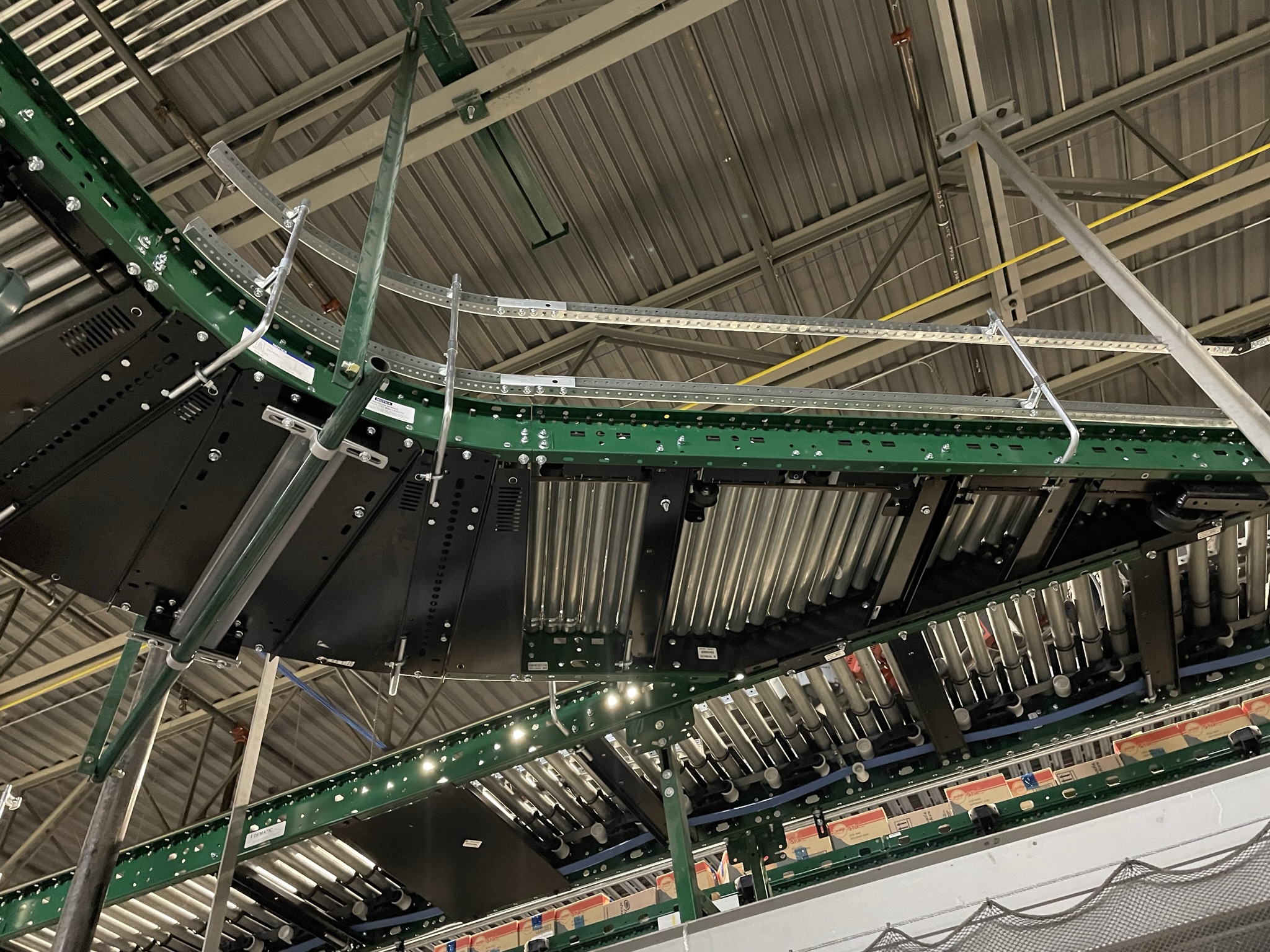
Illustrative belt-and-powered-roller scenario; not a customer record or completed-project claim.
Curve photo eyes misreading
In this example, unreliable acquisition causes repeated line resets. The diagnostic question is whether sensor position, reflectivity, wiring or controls logic is driving the symptom.
The accepted repair would depend on the finding. Mechanical repositioning, guarding changes and controls work each require their own scope and responsibility.
One scope, the whole symptom path
A proposal can group mechanical, pneumatic and sensor observations while keeping trade boundaries explicit.
The checklist and record content should be defined before the visit, including lubrication, alignment, bearings, sensors, pneumatics and drive condition where applicable.
Common questions
The four that come up most often on conveyor work.
01How often should conveyor belts be inspected?
Inspection frequency should follow manufacturer guidance, operating hours, duty, environment, failure consequence and site requirements. Weekly, monthly or quarterly intervals are examples only; the accepted program defines the cadence.
02What causes conveyor belt tracking problems?
Common causes: uneven loading, worn or seized rollers, misaligned idlers, material buildup on pulleys, bad splices. Adjusting a single idler might fix it. Or it could be a structural alignment issue across the whole frame. The fix depends on what we find when we troubleshoot it.
03Can you service powered roller conveyors and sortation systems?
Requests can include belt conveyors, MDR, chain-driven live roller and sortation equipment. Controls and PLC responsibilities must be identified and assigned to the appropriate trade in the accepted scope.
04Do you service conveyor systems in food and beverage facilities?
Food and beverage conveyor scope can require food-grade components, sanitation controls, washdown considerations and site procedures. Those requirements, plus any pneumatic or sensor responsibility, must be confirmed before work.
Uptime is won an hour at a time.
Tell us what's running and what's going wrong.
Share the equipment, symptoms and urgency. Relign reviews the request and confirms current availability and next steps.